Your Baby and its Birth

As a mother or father, you are the gateway for the future to enter and transform the world. Like a temple to the highest, keep your being clean and beautiful. Reach out to the highest when you concieve. And feed that new life not only with nature's good substance, but with ideas, music, stories and love.
These are notes I collected while researching premature birth. They are so important and interesting I want to make them available.

Google
 

{short description of image}

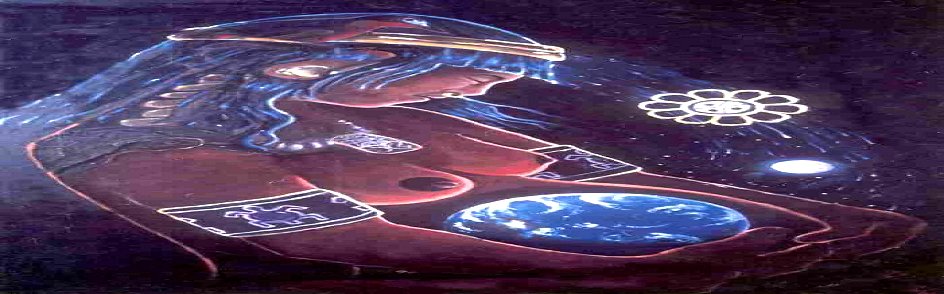
Art by Carlos Caban of Mexico

Quick links to subjects -


Links to Womb Twin sites: - Wombtwin.Com - Vanishing Twins - WombTwin Survivors - Gemini Voices

{short description of image} {short description of image} {short description of image}
{short description of image}

Cute Baby Names


Childbed Fever

Women are still dying of this and shouldn't be. Please support.

{short description of image}

premature birth and postmature birth


In humans, premature birth refers to any birth that occurs significantly before or after the expected date of delivery.

A premature birth is defined as one that occurs less than 37 weeks after conception. In the United States prematurity occurs in about 7 to 9 percent of pregnancies in white women and about 17 percent in black women. A presumptive reason (usually multiple pregnancy, maternal toxemia or hypertension, abnormal attachment of the placenta, or congenital malformation of the infant) can be found for 40 to 60 percent of premature births. Poor maternal health, hygiene, and nutrition increase the likelihood of prematurity; maternal accidents and acute illness are insignificant as causes. The chief specific causes of death among premature infants are respiratory disturbances, infections, and spontaneous hemorrhages, especially into the brain or lungs. With good care, about 85 percent of all live-born premature infants should survive; those of higher weight have a better chance.

Prematurity is to be distinguished from intrauterine growth retardation, in which weight and development are subnormal for fetal age. An estimated 1.5 to 2 percent of all babies are significantly below a birth weight proper to their fetal age. Deficiency of transplacental nutrition from various causes is frequently responsible. Other causes include fetal infections and some malformations. Generally, babies under 5.5 pounds but carried for more than 37 weeks are considered growth-retarded rather than premature.

A postmature birth is any birth that occurs more than three weeks after the expected date of delivery, at which time placental transfer begins to fail, and the fetus receives decreased amounts of oxygen and nutrients. If birth does not occur naturally or is not induced, the fetus will die. Postmature newborns are often thin, with dry, wrinkled skin and unusually long hair and nails. If the postmature child lives through the first few days after birth, its chances for survival are good.

{short description of image}

The Near Birth Experience: Talking with Jerry Bongard


Consciousness research in the last century explored the far reaches of mind and pushed back boundaries in all directions. Verifiable womb memories led to apparent pre-conception memory, while serious reincarnation research and the success of past-life therapy promised to expand human identity well beyond the narrow cradle-to-grave view.

We might expect that all this good news about the psyche's true dimensions will have made a tremendous shift in the way we see ourselves. But, except for the popular embracing of the Near Death Experience, this has not happened. The mainstream model of what we are remains limited and has not incorporated concepts of prenatal memory, consciousness in the womb, and pre-existence.

Why have these expansive ideas failed to capture the popular imagination? Perhaps, in part, it is because the announcing voices have tended to come either from the research and psychotherapy worlds, or from the "New Age" subculture.

Jerry Bongard's new book, The Near-Birth Experience: A Journey to the Center of Self, may be the one finally to engage "middle America." It presents the concept of pre-existence and the possibility of reincarnation, in user-friendly terms that yet fully reveal the transcendent nature of the self. The greatest strength of this book may be that it comes from a person who met these ideas unexpectedly, explored them and found them to be transformational. His enthusiasm is contagious and may well succeed in carrying these exciting concepts past our cultural blind spot.

Jerry Bongard, M.A., M. Div., is a Lutheran minister with thirty years of counseling experience. While serving as director of Chrysalis Counseling Center in Bellevue, Washington, he found many of his clients (Vietnam vets among them) to be suffering from the aftereffects of trauma. It was the search for an effective a way to help these clients that led him to the work of Dr. David Cheek, an important contributor to the literature of pre- and peri-natal psychology.

Jerry Bongard's own spiritual journey took a pivotal turn when he attended a conference with Dr. Cheek in March of 1991. Here he witnessed and learned to apply the technique of regression to the womb through light hypnosis guided by ideomotor finger signals. He soon observed that people moved readily from womb memories to an awareness of existing in a bodiless state before connecting with the fetus. He has devoted the past ten years to exploring the therapeutic and spiritual benefits of this "near birth experience."

The "near birth experience" is Bongard's convenient term for a series of subjective events that may arise spontaneously or be invited in a therapeutic setting. Typically, it involves the use of imagination as a springboard to womb memory, opening into an experience of oneself as spirit and an encounter that is strongly reminiscent of the Near Death Experience.

In the course of my own work I have received numerous reports from people who describe lifelong memories of pre-existence in a non-physical dimension. I assumed that such memories, if they exist in the rest of us, must be very deeply buried. Not so, according to Jerry Bongard. He maintains that memories of our spiritual origins are in fact readily accessible, in an atmosphere of trust and guided by our own inner wisdom via ideomotor signals. The case studies that he presents seem to bear out his contention that the "journey to the center of self" is available to us all.

I had the pleasure of previewing this fascinating book and of corresponding with the author, who graciously agreed to answer my many questions.

ELISABETH: Jerry, I would love to hear more about your initial reactions and thoughts when first confronted with the Near Birth Experience. Since most of us are brought up in a belief system that has nothing to say about an existence before this life, I would imagine there must have been a period of "cognitive dissonance" for you.

JERRY: After the seminar with David Cheek in the Bay Area, I called together a group of six therapists who worked with trauma patients, to show them some of the things I had learned. All seven of us were in the room when the first person agreed to regress back to the womb.

When she was in the womb, I asked her to go back to an earlier time, expecting her to go back to a week or maybe a month earlier than the time she was experiencing, which was just as labor was about to begin. She said, "Nothing is there." So I thought something had gone wrong with the technique, that nothing was there. But when I asked her, "What do you mean, nothing is there?" she said, "There is nothing there, I'm in outer space. I don't even have a body!"

The first person to have a reaction was herself. She began spilling tears which became a steady stream running down her cheeks. And she began to talk of the overwhelming love she was feeling, as she was sobbing. My first thought, as her mascara was running all over her face, was to get a kleenex, but I became so absorbed in the drama of it all that I soon forgot that. I and the other five therapists listened as she described the wonder of being in the presence of a warm Light where she felt so loved, so clean, so treasured. I remember the awe that all of us had in the room. "What is this!" That was my response. "What has happened here?"

That was all we did that first day. The next time we met, another therapist went back to an earlier lifetime, the first time I had observed that. She was the native American "ShoNee" who was in a teepee with her baby, six-year-old son, and her husband. Then she advanced to a time when warriors came from another tribe and killed the son. The story is in the book. She was so amazed when her regression was over. "I don't know anything about Indians!" she said. She had no idea where the names and religious ideas came from.

Both of these were new adventures for me, on the edge of anything I had ever experienced. The first therapist later brought in a picture of the galaxy taken from outer space by an astronaut and said "This is exactly where I was!" I had already been intrigued by Dr. Cheek's work, and was just progressing rapidly from one new experience to another, and I was in a state of disbelief as well as a recognition that "This could be real!" The group of therapists met with me for several weeks as we all tried to sort it out, and I soon went to Aerial Long who had also been at the seminar with Dr. Cheek, and she helped me experience for myself what it was about. My encounter with the Light, with Jesus {detailed in the book}, convinced me it was real and valuable, and ever since I have been engaged in this work.

Now I am open to believing that babies can connect with their mothers before they are conceived, that we have been here before and have reincarnated again, that God is present to all of us, and that our souls are the essence of who we are. The near birth experience has changed my view of life.


{short description of image}


{short description of image}

ELISABETH: One of the intriguing aspects of the near birth experience is the possibility of connecting with one's purpose in life and with choices made "before." I have often wondered whether we would make a better job of this incarnation if we could know these things. Is it common for people to reach such realizations? Or is this rare?

JERRY: For those who go all the way back to the "interlife," I think it is rather common for them to have a new, or re-newed sense of meaning and purpose, of having chosen much of their life.

ELISABETH: Do such realizations -- of choice and purpose -- have the transforming power that I imagine they might yield?

JERRY: That's the real question, and the answer I have is to tell you about two people, one of them in the book.

A man was in the South Pacific as part of the landing forces during World War II, and he was hit by a shell. He almost died. As he blacked out, he said, "Oh God, if you let me live, I will worship you all the days of my life!" When they were about to put him in a body bag they discovered he was still breathing. Two years later his son was born.

The son, now an adult, told me of memories he encountered during the near birth experience. He was an out-of-body soul with God, about to choose a life on earth, when he saw and heard (though without physical eyes and ears, however that works) a soul which became visible as a small light, coming to God and saying, "Oh God, if you let me live, I will worship you all the days of my life!"

This man, the son, then said to God, "I want this man to be my father when I am born, as I don't want ever to forget you. To be born into a family where a father worships you all the days of his life will help me remember."

But what happened is that the father, over a course of many years, stopped worshipping God, and forgot about the deal he made. The son forgot too, for a while, and "drifted." During the near birth experience, he remembered.

In this example, there are two people involved. The father, when he was about to die, "remembered" God and came to him with a promise that he would worship God every day of his life if God let him live. After a while he forgot, but it was a very moving time for him. The son remembered during the near birth experience and he is remembering yet, but many forget, at least in the way they live their lives. Why some are influenced strongly, for a long time, and why some seem to forget, I don't know.

A second example is about a friend of mine who at the age of 42 had a serious heart attack. That was eleven years ago. That made such an impression on him that he asked if he could give the sermon at our church where I was the pastor, after he had recovered from his quadruple by-pass surgery. When he preached he talked about how this heart attack had made him suddenly aware of the real purpose of his life. He regretted spending so much time away from his children and wife, working. He was a very talented person and had made a lot of money, but he loved the "applause" and strokes he got from everybody for his talent, and had often travelled away from family. He vowed that his life would change because of his heart attack. Now it is eleven years later, and he is living about half-way between his life eleven years ago and what he had vowed to do.

He did not have a near birth experience, but he had a spiritual "wake-up call." The near birth experience is like that "wake-up call." Some people never forget it, and some do. It is merely an event in life that people can learn from, or can choose to forget. It is what the Catholics call an "occasion of Grace." It provides an opportunity to re-think, to re-member life. I have personally found it very exciting and helpful. So have others. But some don't seem to benefit very much, if at all, from the experience.

ELISABETH: One point that has struck me in the stories detailed in your book is the very personal God that many people encounter. What kind of experience might someone have whose philosophy was very different, for example a Buddhist, or a devotee of Krishna? To what extent do you think this experience is conditioned by the individual's belief system?

JERRY: The first person who comes to mind is a Boeing engineer who came to see me because he and his wife were having marriage problems. She had asked him to come in because she had encountered God in the near birth experience and wanted him to do so also. She was a devout Methodist. He was a total atheist. "I don't believe in God at all!" he told me.

But he did regress to a time before birth, and found himself floating out of his body in space, out in the universe somewhere. He saw a light in the distance, and I asked him to go toward it. He did, and it appeared brighter and nearer, overwhelming him. I asked him if he recognized what the light was. He immediately opened his eyes, shook his head, and said, "I don't believe in this stuff!" He refused to go any further, but said, "I know you want me to say that was God I saw, but I refuse to say it!"

The people who regress back to a time before this life, to a time I call the "interlife," usually do see a bright light, much as do people in the Near Death Experience. They recognize this Light as God, and communicate with it in a very intimate way. The light seems to be the same for Christians and Jews and atheists. The only Buddhist I regressed to this time also saw the same light and responded to it as the others did. Most of the people do not refer to the Light as "Jesus" or any other name than "God" or "The Light."

It is my opinion that each of us does have a deeply buried memory of God as a Light,and in the regression we connect with that memory, though it is then possible for a communication to take place as if it were a here and now conversation. I think that God does communicate with us where we are, using metaphors and symbols we will understand.

But I think those who connect with God will probably respond well to the symbols and metaphors of other cultures, as they are like archetypes, universal messages of the soul. I think therefore the mystics of Christianity and Judaism and Buddhism and Hinduism will be likely to understand each other and relate well on a soul-to-soul level. Love is pretty much the same in all cultures.

ELISABETH: How does all this fit with your own religious beliefs -- hypnosis, previous lives, existing before this life with God?

JERRY: I think the near birth experience is the most direct experience I have of the teachings of Jesus that "The Kingdom of God, the Kingdom of Heaven, is within you." The ideomotor signals take us directly to the authority which has the most rightful claim to be a guide for our lives. Rather than to let dogma or doctrine or someone else's interpretation of the Bible or Holy Scripture tell us how we need to live our lives, we have access to a better source, our own soul, which in turn has memories of God and the experience of God to guide us. It is a very spiritual experience, and the best connect with our own soul that I have experienced so far.

ELISABETH: What is the main message of your book?

JERRY: It is that life has meaning, every life. We may have forgotten the purpose we chose before we came into this life, but it is there. No life is meaningless. We all have value and have a right to be treasured. We come from God, return to God, and this life is a chance to respond in a loving way to all beings, especially human beings. And, if we don't, we get another chance!

EDITOR'S NOTE: This is Part I of a two-part interview with Jerry Bongard about his book, The Near Birth Experience: A Journey to the Center of Self. New York: Marlowe and Company, 2000

{short description of image}

Interesting Links to Pregnancy and Parenting

Motherhood - lots of features about aspects of motherhood.

A Pregnancy Guide for Expectant Mothers.

{short description of image} - The safest way to birth now has a meeting place for all parents, professionals and community groups to gather, exchange information and offer support.

Pregnancy Resources

Everythinbg from 'Teen Pregnancy' to 'Baby Showers'.

Yahoo links to Pregnancy and Birth

Postpartum Depression

Obesity During Pregnancy

A Mother Who Tried to do Everything and Stressed out

Babyzone - Lots of intersting features such as baby names, nutrition, learning difficulties, breastfeeding, etc.

Adolescent Pregnancy

{short description of image} - American Pregnancy Organisation. Using natural herbs and vitamins during pregnancy.

Also on the same site - Pregnancy Symptoms – early signs of pregnancy and possible alternative explanations for the symptoms.

And - Pregnancy - everything related to pregnancy presented by the American Pregnancy Association.

Dictionary of Pregnancy, Parenting and Preconception

Healthy Pregnancy Planner

Pregnancy and Teens - Lots of links with helpful information. Everything from prevention to dealing with pregnancy.

Pregnancy and Parenting Features - Lots of top class features and guides.

Catholic Social Services (USA) - A support for mothers who are in crisis, homeless or general help.

{short description of image}

Books - Stories - Poems - Articles/Features - Links - One Stop Shop - Home