Archetypes
A page with all Archetypes listed.
Although the word archetype has a long history, Carl Jung used it to express something specific he observed in human nature. He said the archetypes are a tendency or instinctive trend in the human unconscious to express certain motifs or themes. These themes, such as death and rebirth are found throughout history and present day cultures. Jung saw them as universal, and as existing innately within what he called the collective unconscious. They are particularly apparent in religious beliefs, in literature and in the arts.
One of the important features of archetypes is they are not learned behaviour, but behaviour that is in some way innate, or unconsciously formulated or absorbed. For instance while walking near a sea-front with my wife, we saw a small boy running frantically and crying. It was near a road, so I picked him up in case he ran blindly in front of a car. As I held him his legs were still moving as if he were running. He had lost his mother and was completely panicked. As I held him I could hear his mother calling for him. I shouted back and she came and collected him, assuring him of her care.
The child did not have to learn how to feel afraid if he was separated from his parents. He didn’t have to be taught how to feel terror and to do all he could to regain contact. It is a universal response for children to feel emotional pain at the loss of a parent, and to do all they can physically or symbolically, to re-establish contact. You could say the boy was experiencing archetypical behaviour. This innate behaviour has probably arisen out of millions of years during which to be separated from ones parents or group meant probable death.
This bonding behaviour is common to most mammals, and is an example of archetypal responses. The urge to find a partner and reproduce is also an archetype, as is nest or home building, caring for young, and the urge to gain respect within ones social group. We each have an innate urge toward wholeness in some form, and toward the emergence and flowering of our own being. We each face such experiences, along with birth and death, in one way or another, in common with all other human beings past or present. The enormity of such experiences in our life are often expressed in themes of art, myths, or symbols such as the mandala, the cross, sunrise and sunset. The little boy’s loss of his parents and the enormity of what he felt is seen in many folk tales such as Babes in the Wood. Such symbols and stories remind us in some degree of the mystery involved in the fact that not only are we as an individual sharing the experience of being a man or woman, but this has happened to people since the beginning of the human race, and will continue after our life has ended. So although our life is a personal event, it is also part of an inconceivably immense continuum. Our personal life plays out themes or patterns which have been lived and added to thousands or millions of times before.
It is this collective experience which can be considered as the archetype. For instance if we could superimpose all the male faces, and all the female faces, of everyone alive today in two separate images, the resulting images would be the graphic archetype of a human male and a human female. The images would include all the features, all the racial types, all degrees of intelligence and honour. In terms of such experiences as puberty, marriage and death, the collective human experience creates such an archetype. The difficult question is how?
But it must be understood that the archetypes are all originated by human responses and behaviour – or at least by the behaviour of life forms on this planet. The holy, the devilish are all expressions of ourselves which we project as outer figures.
Jung differentiated between instincts and archetypes however. Although both are universal potentialities within us, the instincts are inherited tendencies toward behaviour, such as sex and the flight or fight response. An archetype Jung said is an inherited tendency toward certain mental or feeling responses. For instance the myth of the hero/heroine or saviour figure is world-wide and in all cultures. Because Jung believed that dreams frequently express the archetypal tendencies within the individual, he often turned to myths, fairy stories or religious motifs, to illustrate the contents of a dream. Seeing such themes arise in the dreams of people who had not studied world religions or mythology, Jung believed that far from religious and mythological stories having been consciously invented by historical authors, they had arisen directly from the unconscious in dreams or visions, and had simply been reported. Anyone who has spent time exploring the depths of their own dreams will find sympathy with and proof of this view. But as such they are still arising from human experience, but one which originates in the unconscious ability to have an overview of human experience and provides images of its findings
However, there is another important way of considering archetypes. It is that certain processes in nature and therefore in human life, reflect processes that are part of the very foundation of cosmic functioning. For instance stars are born from the death of other stars and solar systems. Birth follows death. Resurrection and new life arises out of cataclysmic destruction. Also, the very structure of our universe, as understood in quantum physics, shows how the immanent, the here and now, the limited and the physically real, is at the same time one and the same as the timeless and transcendent.
The personal experience of being a woman or man, of birth, childhood and death, are all expressions of cosmic processes, and can be understood much more deeply when seen as such. These archetypal patterns are true not only in cosmic events, but also in the most minute of human affairs.
Another way of understanding an archetype and how it came about is to consider something like a house. The earliest of human types erected shelters when these were needed. Some of the apes did the same. Over the millennia since those early beginnings people have seen what was done in the past and developed it. The old types of houses are still built around the central essence of what those early house builders had in mind. But now the house as a general object is an immense range of possibilities built around a central and ancient human and animal behaviour. This essence of house, this immense collection of behaviours humans have gradually developed around house construction is an archetype. It is an essence of all the behaviours employed in building a house. It is a deeply buried pattern of racial and cultural memory. It influences current house builders just as it influenced ancient ancestors. It is also a living thing, constantly absorbing whatever is new and being a source of creativity an influence in present individuals.
An expression of these archetypal forces lies at the heart of all major religions. As Barbara Sproul points out in her book Primal Myths, we unfortunately confuse a mythological account of an archetypal pattern with an historical account. Or we look at the mythologies of the past and see them as statements of ignorance, instead of wonderful summaries of insight into these great patterns of human behaviour, thought and feelings that pervade our life.
We see this wisdom and shrewd summary of insight in the pantheon of gods and goddesses some ancient cultures erected. Many of these gods were expressions of archetypal themes, such as death, rebirth, and womanhood. In other words, behaviour or experience repeated times beyond count. A sheep dog has in itself a greater propensity to herd animals under direction than many other dog breeds. Through rituals and worship of the gods, perhaps ancient people touched similar reservoirs of strength and healing innate in themselves, buried there by the immense number of lives that left traces of genius, or persistence against odds, of curiosity or love. Without such, the individual might find it more difficult to face the fact that death waits at the end of life, or to allow sexuality to emerge into their life at puberty. From the collective experience could arise ways of dealing with problems, or strengths, that did not reside directly in the person’s conscious personality. The negative side of this is that occasionally a person completely identifies with an archetype. For instance one may meet the archetype of Christ and come to believe that one is now the incarnation of Christ and ones mission is saviour of the world. Such powerful identifications cause dangerous alienation from a down to earth relationship with people and life. In some cultures, such as India, this may not be to harmful, in that other people may accept the identification and see the person as a guru or divine incarnation.
Another way of looking at this is of seeing that as our body and human personality are expressions of forces and processes in nature – archetypal forces and processes – we have within us enormous reserves of strength, creativity and survival. When faced by difficulties or crisis in life, turning to these reserves brings much greater power to our life than if we face them with our own limited conscious resources.
A girl suffering from anorexia told me a dream in which she was cutting off her own breasts with scissors. It takes little imagination to see the dream as portraying the development of her sexual traits – her breasts – and depicts her trying to rid herself of them. Perhaps she ‘cuts them off’ by not eating, and thus not giving her body and psyche enough energy and nourishment to mature. In the past, it would have been recommended that she give offerings to a goddess, thus aligning her with the unconscious archetype or power to become a woman. Such methods were the form of psychotherapy used by ancient cultures.
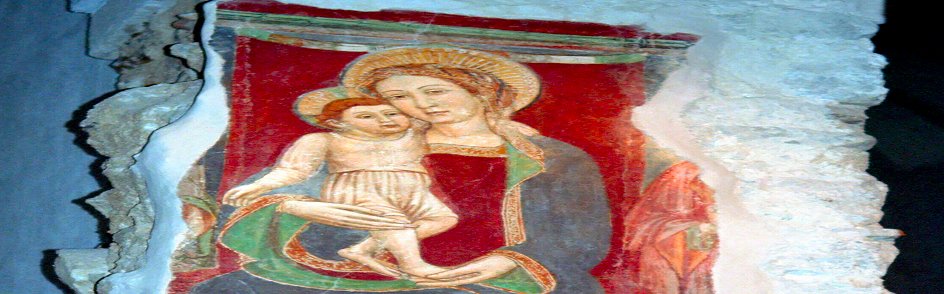
Jung’s theory of the archetypes has never been generally accepted, perhaps because it is difficult to test objectively. In more recent years however, through the tremendously amplified access to the unconscious made possible in psychiatry through such drugs as LSD, a lot more information about unconscious imagery has been made available. From this it seems possible that certain synthesising aspects of the mind produce images to represent huge areas of personal experience, i.e. the Mystic Mother or Madonna representing our accumulated positive experience of our mother, as well as the fundamental female processes seen in the fertility of the earth; and the witch as representing the frightening and negative aspect. These symbols, already presented to us outwardly through our cultural art and religious images, appear to become focal points for personal experience and realisations to crystallise around, often with enormous emotional power. Also, language and literature themselves present immense variety about all aspects of human existence and how we can usefully meet it. Each of these inputs can add to personal experience, understanding, and feelings. These cultural inputs influence our relationship with hugely important aspects of our life, such as marriage, childbirth and social relationship. Also, the fundamental processes of nature that are involved in marriage and giving birth, as seen in the unity of the sun’s energy, allied with the earth’s fertility, bringing forth life, lie behind all our human experiences.
The propensity for human beings of widely separated cultures, language, age, or gender, to meet with the same symbols in their dreams, fantasies or religious feelings suggests, not necessarily a collective unconscious, but certainly an innate sensing of collective human experience, and a meeting with the forces of the cosmos active in us. Because the mass of experience we hold, or live within, is largely unconscious, it does seem likely that when we are unguarded in our sleep, or at times of stress or heightened feelings, the themes and images connected with archetypal experience would emerge. At such times our dreams depict aspects of our individual relationship with this collective human experience, with Life itself, or what we have harvested from it. Such dreams suggest that the essence of all experience is somehow available to us, and that we are directly part of the huge processes of the cosmos.
For instance if a married woman with two children falls in love with a man outside of her marriage, and her family and cultural values stress the wrongness of such feelings, she is likely to experience enormous conflict. This conflict could lead to depression, withdrawal or suicide. But in the end what she is struggling with is the opposition between personal drives – her love for the man – and her cultural and family standards. If we look at the way men and women live and survive throughout the world, then such standards appear purely local. They are not innate. So underlying the ‘local’ customs she is trying to honour but is in conflict with, exists a human potential for many different ways of dealing with love and attraction. This enormous human potential is one of the archetypes, and is represented by light, a holy figure such as Christ, or a sparkling ocean. To consciously meet this archetype could reduce or remove the conflict.
Our largely unconscious connection with the massive potential that we hold within, and our direct existence within the warp and woof of cosmic and natural forces, forms a dynamic ever moving and developing process that our conscious and apparently independent personality interacts with. This is much like our relationship with language, which existed prior to our birth, and which we only use and become a living expression of during our short lives. Language is a reservoir of past thought and endeavour, a huge and wondrous living force which holds in it the essence of all great lives and thoughts. Within language can be found as much history as can ever be found by archaeological digs. From it we gain personal self awareness and interpersonal communication. We may add to it and use it, but it is never limited to our personal self. In fact much of our meeting with collective human experience may be a meeting with language and all it conveys and produces in us.
If we could become conscious of an entire language, we would see how we and the language we use has emerged out of an immense history, an amalgamation of all human experience, constantly shifting. We would have a vision of the extraordinary mind, love, pain, and multifaceted nature of human life. This would be a god-like experience. It is perhaps the sense of such huge and real reservoirs of human experience that we sense unconsciously, and erect a god or archetypal image around.
The simplest definition of the archetypes is that they are symbols of our own enormous potential. In particular they depict potential that still remains unconscious, and the details of archetypal dreams shows us how we are relating to that potential.
But a simple way of thinking about an archetype is to consider what your reaction to the idea of death is. Whatever your response is, such as dread, avoidance of thinking about it, desire for it, you may consider it to be very personal. But your response is typical of millions of other human beings. It is also coloured and even promoted by the culture in which you live, the literature and art of your culture, or that you have been exposed to. Such collective human responses to the major life situation we face, are therefore archetypes – patterns of behaviour laid down and deepened by millions of human lives.
Whatever may be the explanation of these archetypal images and intuitions, they are important because they give us a sense of how we as an individual, and human beings collectively, have been able to develop our identity amidst enormous forces of unconsciousness, collectivity and external stresses. They depict graphically the universal levels of experience out of which our personal self is woven. They also give some personal experience of how at some level of our being we are intricately intermeshed with all creatures, with all the cosmos. This is no longer simply an imaginative or mystical idea. It is also one which is expressed by scientific thinkers such as Bohm, who says ‘Deep down the consciousness of mankind is one.’ See: collective unconscious.
The following gives a vivid example of a potently archetypal dream, which in its drama gives C. A. an immediate experience of his conscious personality being part of something vaster and more ancient. The dream has in it a number of archetypal symbols – the star; light; the female; marriage or unity; and the eternal circle of life.
Example: Before I went to sleep that night I focused on the question – Who am I, really?
The dream was vivid, and still gives me shivers to this day. I dreamed that I looked up and there was this incredible star that was emanating points of light in the sky. It got brighter and brighter and the bottom-most point reached down to where I was and transported me up to the star. The points of light came out from the centre in all directions, and I found myself on the end of one of the horizontal points. A wonderful (female) voice spoke to me and said this is who you are, and I had the strong sense of being located at the end of the horizontal light bar. Then she said and this is who you are and carried (transported in some way) me to the next bar of light, where I saw another version (incarnation?) of myself (in a different time and place, although I knew that the essence of this version of me was really me). She continued transporting me from bar to bar where I experienced myself in many different versions in the past, present, and future. I had different skills and interests that were the focal point of each version of myself–a musician in one, a farmer in another. Some of the versions were females, although I experienced the same sense of self in all of them. Then she returned me to the horizontal bar of my current self and said to me that all of this is who I am, but that now she was going to show me who I really am. Then she drew me into the centre of the star (light, energy source) where I merged with her and could see each of the emanating points of light as manifestations of a single source or spirit. It was one of the most incredible feelings of being integrated and whole that I’ve ever experienced, and I basked in the feeling for a while just absorbing and soaking it in. Then she returned me to myself (with a cosmic wink) and I slept peacefully for the rest of the night. Ever since then I haven’t felt the need to ask who or what I am, and I’ve seen my various abilities and struggles in life in a totally new way. C.A.
When considering any of the archetypal forces that act on our psyche, it needs to be remembered that there is never a single way of relating to them. It is helpful to use Hubbard’s concept of the panther on the stairs to identify the different ways we can relate to an archetype. For instance, if there were a black panther on the stairs of our house, there are several ways we could relate to it. We could attack it, flee from it, avoid it, ignore/neglect it (for instance by making out it wasn’t really there), succumb to it, or we might even make friends with it, or learn from it through observing it.
Similarly, with one of the most powerful of archetypal confrontations we can face, that of death, we might relate to it in a particular way. Perhaps we run from the image in our dreams, or even make out it isn’t there. It is therefore worth remembering that whatever stance we find ourselves in, there ARE other possibilities.
What is the difference between a normal dream symbol and an archetype?
If you begin to explore your feelings and associations with an archetype it starts to take you beyond what you personally have previously known and experienced. The archetype is a pattern or influence in a level of consciousness that, while it is a deeper level of your own being, yet is at the same time a collective pattern formed by many human beings or even animals. It is often full of collective wisdom and energy, both positive and negative, depending upon how you relate to it. In the original Greek and Roman the word referred to a template, mould, copy, pattern or model. So there could be an archetype of the human body. Such an archetype would not look like any one person or gender, but include all forms, all types of human body. In the way it is used here it refers to this type of fundamental and inclusive pattern formed by immense numbers of human actions and responses to particular life situations or environments. Being such huge sources of influence we as an individual can draw from them particular needs or energy.
Example: Now it seemed as if my awareness went beyond the frontier. This was a very visual experience. I was seeing a vast desert and I knew this represented immense periods of time, perhaps what we call eternity. So it could be called the Desert of Eternity. Here and there in the desert were huge rock formations, a little bit like what one sees in Monument Valley in Arizona. But these rock formations were not plain or slightly coloured rock. Also they were immense. They had the appearance of massive mosaics – brightly coloured mosaics. But the mosaics did not form illustrations or patterns. However, some pieces of the mosaics were larger than others. And each piece might be in itself multicoloured and a sort of miniature pictograph.
As I looked at these massive formations I understood that they had been carved or created through events in the passage of time. Each mosaic, each part of the overall mosaic, had been formed by enormous creative acts, or by long-standing actions. So these latter were like ideograms or archetypes. So, for instance, mother creatures have cared for, fought for, died for their young. This pattern of behaviour has been so enormously potent and perhaps we can use the word successful, that it has created, shaped aspects of eternity. It has left its pattern, its artwork, on time itself. Thus eternity honours that pattern by giving it a place in the very structure of itself. No one being created such a mosaic in the formations. Such a mosaic was large and had in it the essence of all the lives that formed it.
 |
So the rock formations and the mosaics on them represented influences that will flow into the future. They were sources of power or influence that shaped the phenomenal world. They were the body under the coat so to speak. |
Am I more influenced by certain archetypes more than others?
You probably are, and reading through the descriptions and questions below may help you define what patterns you link with most strongly.
Can I change the way archetypes influence me?
All of us live in a powerful archetype called a paradigm. Other words meaning something similar are groupthink, mindset and worldview. For instance during the 19th century the common paradigm or world view was that described by the physics of the time. It seemed to know all the answers, saw the atom as the fundamental form of matter, and thus stated there was nothing beyond the physical form and brain. This led to a view of the world we called materialism. The materialistic viewpoint was a paradigm. So many people lived it and believed it that it had immense influence on individuals, and still does. It more or less created or helped create the way they saw the world and how they related to life events. But in 1906 Max Planck published what has come to be known as his quantum theory. This, with Einstein’s theory or relativity and all that arose from them, revolutionised physics and created a huge paradigm shift; one that is still only slowly entering general personal awareness. From this new paradigm the atom was by no means the fundamental particle, Human observation or consciousness was seen to be a powerful factor in how sub atomic particles manifested.
The point being made is that if you are aware that your world view is most likely formed out of an extant paradigm or world view, and this is a form of archetype, the awareness of this enables you to not be controlled by the archetype and capable of extending or rejecting it.
Comments
Amazing site, I just found it by synchronicity, Im’ quite sure. I wish I could go to therapy with you (I’m in Mexico) but it certainly has motivated me to find someone here that has a Jungian approach. I’ve felt a transformation coming for some time now, and sincerely, finding this site and your work is the first step towards there, I sense. Peace and blessings.
Gerry – Thank you for what you say about the site.
From entering so many of my own and other people’s dreams, I see that the path of dreams is a great path for change and for spiritual enlightenment. It goes right to the very heart of what you need to confront and meet in your life. It doesn’t wander around in intellectual mazes or conjecture but meets you head on. It takes into account all of your nature, body could and spirit. It shows you the karma you need to face and the way to meet it.
I am sure you will find a guide if you sincerely wish for it. But wonderful guides come in all shapes and sizes, so do not think only of Jungian approach. In Mexico there are many traditional guides as well.
But you could start with using a direct path of dreams if you know someone who will be a partner in the journey. See http://dreamhawk.com/dream-encyclopedia/peer-dream-group/
You are with many who may be invisible to you.
Tony
Hello,
I like your site. I’ll revisit again.
One suggestion is that when navigating the site, there don’t seem to be clear links from one page to another except similar articles. I fell upon an archetype page, but had to search for this page as the foundation for the other page. The site might be more easily navigated, if the page were linked directly from all archetype pages. If you’ve written a book about this, it would be really helpful to have that book clearly indicated, as I’d buy it.
David – I used to have a site with such a page, but was told it wasn’t needed. But I have just started such a page after reading your suggestion. Here is the link to it http://dreamhawk.com/dream-encyclopedia/archetypes-links-to
But I have only just started it so only a few of the links work – give me time and they will all work.
But you could have just put Archetype in the search box and that would have found them all – though not as fast as this page.
Tony
Hello Mr Crisp,
For my gothic literature class in college, I want to write my final paper on the energy a mother experiences when she must wait for a child that is missing, and on the energy that watches, like the malevolent house in “The Haunting”. I feel the energies are closely linked but can not discover where the link is or what archetype would be closest for the watcher. Am I right that both of trapped by their link to that spot? And what archetypes would I research.
Regards
Pam – Excuse me for taking time to answer, but I tend to go through them in date order and there is a lot to answer and think about.
I can only give you my opinion, and that may seem very radical. I believe that without exception what traps us is our own mind. If we feel fear and horror, that is what traps us. And the only link that has with a place is the collective thoughts and feelings attached to it.
The only way I can make this real to you is to describe something I experienced myself with another person, See http://dreamhawk.com/yoga/yoga-and-japan-part-2/#gods
All psychic and spiritual experience takes place in the dream world. The only difference is that waking spiritual or psychic experience breaks through the barrier usually in place in dreaming into the waking state. See also http://dreamhawk.com/inner-life/breaking-through-to-the-psychic-and-spiritual/
Tony